
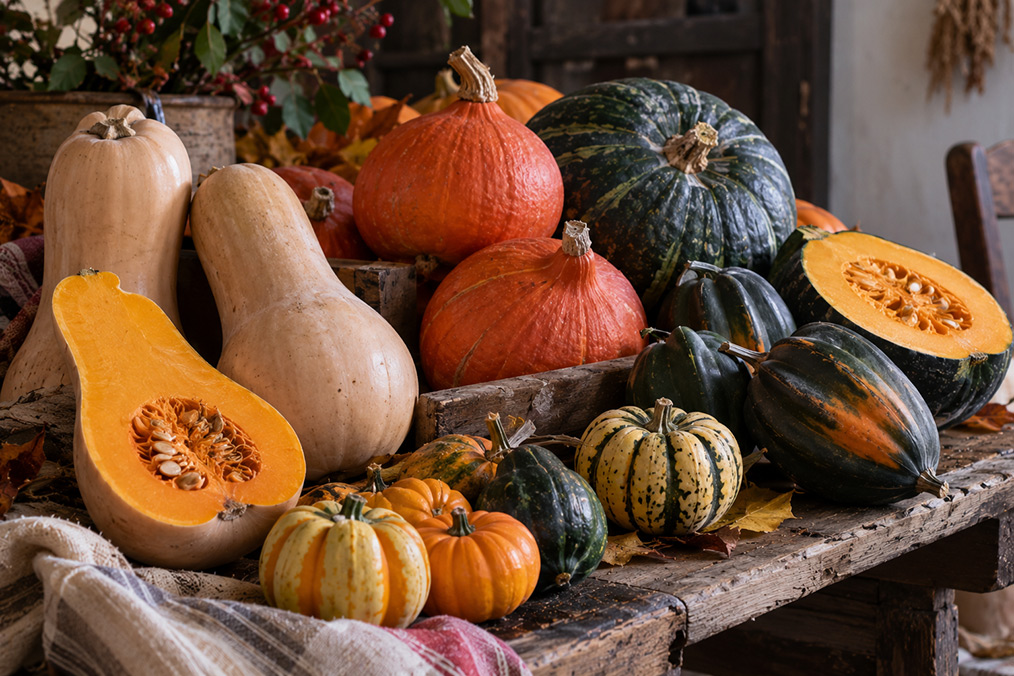
Squash comes into its own in autumn and winter, when its naturally sweet flesh is ideal for warming soups, roasted vegetables, hearty stews and comforting bakes. But it has much more to offer than a simple bowl of roasted squash or a creamy soup. Depending on the variety, it can be stuffed, grilled, added to salads, curries and omelettes, or puréed into cakes, pancakes and desserts. Squash is popular in cuisines around the world, from Italian pumpkin risotto and Japanese kabocha dishes to Mexican stews and traditional American pumpkin pie. In the United States, pumpkins are particularly associated with autumn, Thanksgiving and Halloween, when they feature in both the kitchen and seasonal celebrations. Our squash recipes offer plenty of inspiration for making the most of this versatile vegetable, whether you prefer savoury dishes or something sweet.
Types of squash
Squash belongs to the gourd family, Cucurbitaceae, which also includes cucumbers, melons and courgettes. There are many varieties, with differences in size, skin colour, flesh texture and sweetness. Some are best suited to roasting and mashing, while others are ideal for stuffing, soups or baking.
The distinction between summer and winter squash is useful in the kitchen. Summer squash, such as courgettes, are harvested while their skins are tender and their seeds are immature. Winter squash are generally harvested when mature, with firmer skins and flesh that can be stored for longer. Despite the name, winter squash are grown during warmer months and are usually harvested in late summer or autumn.
Pumpkin
- Pumpkins are among the best-known winter squash, although the word pumpkin is used differently in different countries. They vary from large, pale-skinned varieties to small, deeply coloured pumpkins with sweet, dense flesh. Some are excellent for roasting, soups and purées, while others are grown primarily for decoration.
- In the UK, traditional cooking pumpkins are available in autumn, although their flavour and texture can vary considerably. Smaller culinary pumpkins are often a better choice for cooking than the very large varieties sold mainly for carving.
- The large pumpkins sold for Halloween carving are another category. Their flesh can be edible, but many carving varieties have a watery texture and less pronounced flavour than pumpkins bred for cooking. They are generally better used in dishes where the flesh can be combined with other ingredients, such as soups, muffins, pancakes or fritters.
Butternut squash
- Butternut squash is one of the most popular varieties in British supermarkets. It has a distinctive pear-shaped body, beige skin and bright orange flesh, with a relatively small seed cavity. Its smooth, sweet, slightly nutty flavour makes it particularly versatile.
- Butternut squash is excellent roasted, mashed or blended into soup. It also works well in risottos, curries, pasta sauces, salads and vegetarian bakes. Its firm flesh holds its shape when cut into cubes, while roasting brings out its sweetness and encourages caramelisation.
- Butternut squash is particularly useful when a recipe calls for pumpkin but a cooking pumpkin is unavailable. The two are not identical, but they can often be used interchangeably in soups, purées, pies and stews. Because butternut squash has a relatively smooth texture and a consistent flavour, it is also a good choice for anyone new to cooking with winter squash.
Hokkaido squash and kabocha
- Hokkaido squash, often sold as red kuri squash, has a compact shape and usually a red-orange skin. Its flesh is sweet, dense and slightly nutty. One of its practical advantages is that the skin is edible when properly cooked, so peeling is often unnecessary.
- Kabocha is a Japanese winter squash with dark green skin and rich orange-yellow flesh. It has a dense, sweet texture that works particularly well in Japanese simmered dishes, soups, tempura and roasted vegetable dishes. Both Hokkaido and kabocha are excellent choices for stuffing, roasting and adding to curries.
Other varieties
Acorn squash has a ridged, acorn-like shape and is often halved, stuffed and baked. Delicata squash has a thinner, striped skin that is edible when cooked, making it convenient for roasting. Spaghetti squash has flesh that separates into strands after cooking and can be served with sauces as an alternative to pasta, although its texture and nutritional composition differ from those of wheat pasta.
Nutritional value and health benefits
Winter squash is generally low in calories and provides fibre, vitamins, minerals and naturally occurring plant compounds. The exact nutritional profile depends on the variety, and the final calorie content of a dish will also depend on added oil, butter, cream, sugar or other ingredients.
- Beta-carotene and vitamin A. Orange-fleshed squash, including pumpkin and butternut squash, can be an excellent source of beta-carotene, which the body converts into vitamin A. Vitamin A contributes to normal vision, immune function and the maintenance of healthy skin and mucous membranes. Darker orange flesh generally indicates a higher carotenoid content, although levels vary between varieties.
- Fibre and digestion. Squash provides dietary fibre, which contributes to normal bowel function and can help meals feel more satisfying. Its soft texture when cooked makes it easy to incorporate into soups, purées and other dishes. The amount of fibre varies by variety and preparation.
- Vitamin C and other nutrients. Squash provides vitamin C, potassium and smaller amounts of several B vitamins and other minerals. Vitamin C contributes to normal immune function and helps protect cells from oxidative stress. Potassium contributes to normal muscle function and the maintenance of normal blood pressure.
- Antioxidant plant compounds. Orange-fleshed varieties contain carotenoids, while some varieties also provide other plant compounds with antioxidant activity. These compounds are of scientific interest, but it is not accurate to claim that eating squash prevents cancer or other specific diseases. Its value lies in contributing to a varied diet rich in vegetables.
- Calories and carbohydrates. Many winter squash varieties are relatively low in calories compared with starchy foods such as potatoes, although their carbohydrate content varies. Butternut squash and pumpkin provide natural carbohydrates and can be part of balanced meals. Their glycaemic response depends on the variety, portion size, preparation and foods eaten alongside them.
Overall, squash is a useful way to add colour, flavour and nutrients to autumn and winter meals. It is not necessary to regard it as a special superfood – including a variety of vegetables, fruits, pulses and whole grains is more important than relying on any single ingredient.
Buying squash
- Choose a squash that feels heavy for its size, with firm, intact skin and no soft patches, mould or deep damage. A mature winter squash should generally have a hard rind rather than skin that can be easily pierced with a fingernail. Depending on the variety, the stem may be dry and firm.
- When buying a whole pumpkin or other large squash, check that it has no damp or sunken areas, which can indicate deterioration. For cut squash, look for firm, brightly coloured flesh without excessive moisture or discolouration. The flesh should not look dry, spongy or unusually pale for that variety.
- If you are buying squash for a particular recipe, consider its texture as well as its flavour. Dense, sweet varieties are excellent for roasting and mashing, while a more watery pumpkin may be better suited to soups, where excess moisture can be adjusted during cooking.
- Butternut squash is usually sold whole or in ready-prepared cubes in supermarkets. Whole squash generally keep longer, while prepared pieces are convenient but should be refrigerated and used by the date indicated on the packaging.
How to store squash
- Whole, mature winter squash can often be stored for several weeks or even months, depending on the variety and the condition of the skin. Keep it in a cool, dry, well-ventilated place away from direct sunlight. Avoid storing squash where moisture collects, and check it periodically for soft spots or mould.
- Once cut, squash should be wrapped or placed in an airtight container and refrigerated. Use it within a few days.
- Peeled and cubed squash can also be frozen, ideally after briefly blanching or cooking it, depending on how you plan to use it later. Cooked squash purée freezes particularly well and can be used in soups, sauces, muffins and cakes.
Pumpkin, Halloween and Thanksgiving in the United States
- Pumpkin has a special place in American autumn traditions. At Halloween, pumpkins are carved into lanterns known as jack-o’-lanterns, often with faces cut into the skin and a light placed inside. The tradition developed from older customs of carving root vegetables and became strongly associated with pumpkins in North America, where they were readily available and large enough to carve.
- The flesh removed from a carving pumpkin does not necessarily need to be wasted. Although large carving varieties are often less flavourful than culinary pumpkins, the flesh can be used in soups, vegetable bakes, muffins, pancakes and fritters. Remove the seeds and stringy fibres, then cook the flesh until tender. If it is watery, drain or reduce it before using it in a recipe.
- Pumpkin is also central to Thanksgiving cooking in the US. Pumpkin pie, usually made with a spiced pumpkin custard in a pastry crust, is one of the best-known American desserts.
- Pumpkin purée is also used in breads, muffins, cakes and other autumn bakes. Pumpkin-flavoured drinks and desserts have become particularly prominent in seasonal café menus, although many commercial products use pumpkin spice flavouring rather than large amounts of actual pumpkin.
Recipes with Squash >>
Recipes with Pumpkin >>