
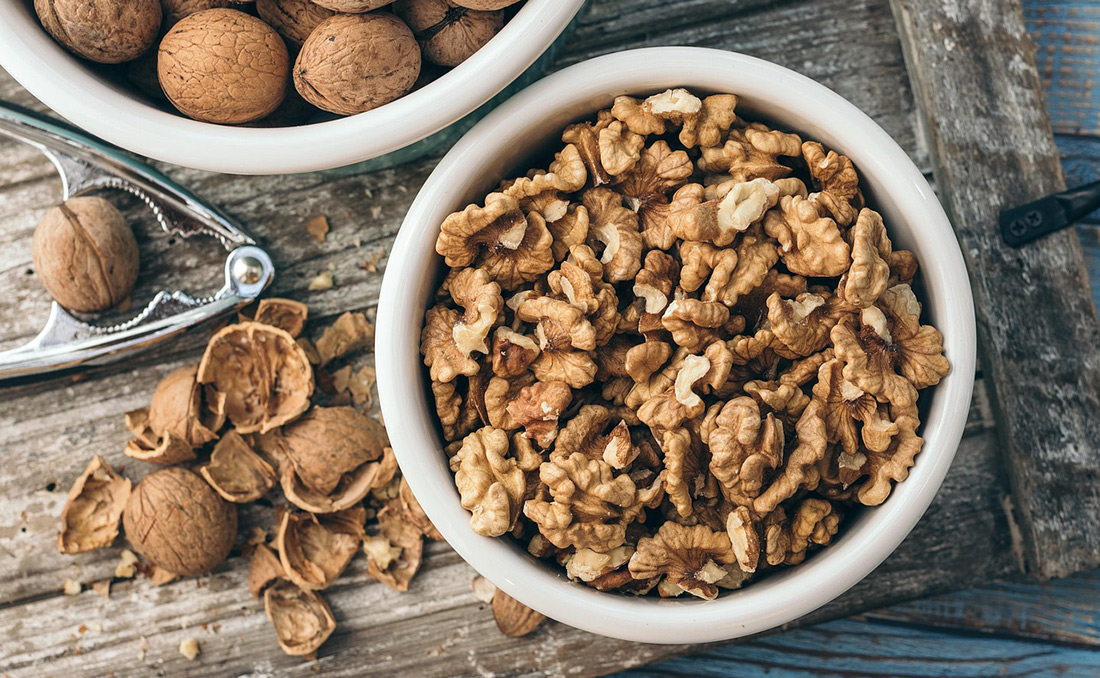
Walnuts are among the most versatile and widely enjoyed tree nuts in the world. Their distinctive, slightly bitter flavour and crunchy texture make them equally suitable for sweet and savoury dishes, from cakes and biscuits to salads, pasta sauces and vegetable dishes. They are also used in drinks, preserves and traditional liqueurs. Rich in unsaturated fats, fibre and several important nutrients, walnuts are valued for both their culinary versatility and nutritional benefits. Here is more about their origins, varieties, uses and how to enjoy them in walnut recipes.
The origin of walnuts
The common walnut (Juglans regia) is believed to have originated in a region stretching from the Balkans and the Caucasus through Central Asia. It has been cultivated for thousands of years and was already highly valued by the ancient Greeks and Romans. The Romans helped spread walnut cultivation across Europe, where the trees became established in orchards, gardens and monastery grounds.
Walnuts were prized not only for their edible kernels but also for their hard, attractive timber, which is still used in furniture making and woodworking. Their ability to be stored for relatively long periods made them an important source of food, particularly during winter.
Today, walnuts are grown in many parts of the world, including China, the United States, Iran, Turkey, France, Ukraine, Chile and Australia.
Walnut cultivation and varieties
- Walnut trees prefer temperate climates with sufficient winter chilling and warm summers. They can grow into large, long-lived trees, producing their harvest in autumn. Depending on the hemisphere, the main harvesting season falls between September and November in the Northern Hemisphere and around March to May in the Southern Hemisphere.
- The walnut fruit develops inside a green outer husk, which splits open as it ripens, revealing the hard shell. Inside is the familiar edible kernel, usually divided into two lobes.
- There are numerous walnut cultivars, differing in shell thickness, kernel size, colour, yield and flavour. Chandler is one of the best-known commercial varieties, particularly in California. It produces large, light-coloured kernels with a relatively mild flavour. Howard is another Californian variety, valued for its kernel quality and productivity.
- European varieties include Lara, known for its large nuts, and Fernor, a French cultivar valued for its relatively late leafing, which can help reduce the risk of spring frost damage. Pedro, originating in the United States, is an earlier-bearing variety often grown in regions with shorter growing seasons.
Buying and storing walnuts
- Freshness is particularly important when buying walnuts because their high oil content makes them susceptible to rancidity. Good-quality kernels should have a relatively pale, creamy colour and a clean, nutty smell. Avoid nuts that smell musty or paint-like, or taste unpleasantly bitter.
- Whole walnuts in their shells generally keep longer than shelled kernels because the shell protects them from air and light. Choose shells that are intact and free from cracks or signs of mould.
- Store walnuts in an airtight container in a cool, dark and dry place. Shelled walnuts are best kept in the refrigerator, where they will stay fresh for longer. They can also be frozen for up to a year, retaining much of their flavour and texture. There is no need to thaw them before adding them to baking or cooking.
Nutritional benefits of walnuts
- Walnuts are particularly rich in polyunsaturated fats, including alpha-linolenic acid (ALA), a plant-based omega-3 fatty acid. They also provide protein, dietary fibre, vitamin E, several B vitamins and minerals such as magnesium, copper, manganese and potassium.
- Their unsaturated fats make walnuts a useful addition to a heart-conscious diet. Replacing foods rich in saturated fats with nuts such as walnuts can help improve blood cholesterol levels. ALA also contributes to the maintenance of normal blood cholesterol levels when consumed in sufficient amounts.
- Walnuts contain polyphenols and other antioxidant compounds, which have attracted scientific interest for their possible role in supporting cardiovascular and metabolic health. Research has also explored potential links between walnut consumption and cognitive health, although more evidence is needed before drawing firm conclusions.
- Like other nuts, walnuts are energy-dense, providing approximately 650–700 kcal per 100g. A small handful of around 25–30g is a practical serving for everyday eating. This is roughly 12–14 walnut halves, although the exact number depends on their size.
Traditional uses of walnuts
Walnuts have long been used in traditional food cultures, not only as a source of nourishment but also in homemade preserves, oils and alcoholic drinks. In some European and Middle Eastern traditions, unripe green walnuts are harvested before the shells harden. They can be preserved in syrup, pickled or infused in alcohol to make distinctive liqueurs. Walnut leaves, shells and green husks have also been used in folk remedies and as natural dyes.
How to use walnuts in cooking
Walnuts are used in cuisines around the world, from European baking and Italian pasta dishes to Middle Eastern sauces and Asian-inspired savoury dishes. Their rich flavour works particularly well with fruit, cheese, chocolate, honey and spices.
Sweet dishes and baking
- Walnuts are a classic ingredient in cakes, biscuits, brownies, pies and pastries. They are particularly popular in carrot cake, banana bread, coffee and walnut cake, and chocolate brownies. Chopped walnuts add texture to muffins, flapjacks, fruit crumbles and homemade granola.
- In Eastern and Central European baking, walnuts are often used in filled pastries, sweet rolls and layered cakes. They are also an essential ingredient in many versions of baklava, the rich, syrup-soaked pastry popular across Turkey, Greece and the Middle East.
- Walnuts pair beautifully with apples, pears, dates, honey, cinnamon and dark chocolate. They can be used whole, chopped or finely ground, depending on the recipe.
Savoury dishes
- Walnuts add crunch and depth of flavour to salads, roasted vegetables, grain dishes and pasta. They work particularly well with beetroot, squash, chicory, apples, blue cheese and goat’s cheese.
- In Italian cuisine, pesto di noci is a traditional walnut sauce, particularly associated with Liguria. It is made by blending walnuts with ingredients such as garlic, cheese, olive oil and bread, and is served with pasta. Walnuts can also be used in creamy pasta sauces or simply toasted and scattered over finished dishes.
- In Georgian cuisine, walnuts are an important ingredient in badrijani nigvzit, aubergine rolls filled with a seasoned walnut paste. They are also used in sauces served with vegetables, poultry and meat.
- Walnuts are particularly useful in vegetarian and vegan cooking. Finely chopped or ground walnuts can add texture to vegetable burgers, stuffed vegetables, pasta fillings and meat-free sauces. Toasting them briefly before use brings out their nutty flavour.
Drinks, oils and preserves
- Walnuts are used in several traditional liqueurs, most famously Italian nocino, made by steeping green walnuts in alcohol with sugar and spices. Similar homemade walnut liqueurs are found in parts of Eastern Europe and the Balkans.
- Walnut oil is a delicate, aromatic oil best used cold or added at the end of cooking, rather than exposed to prolonged high heat. It is excellent in vinaigrettes and pairs particularly well with bitter salad leaves, pears and blue cheese.
- Pickled walnuts are a traditional British speciality, usually made from immature green walnuts preserved in spiced vinegar. They are served with cheese, cold meats, pâté and roast meat, particularly during the colder months.
- Walnut milk is another option, made by blending soaked walnuts with water and straining the mixture. It can be used in drinks, porridge and some desserts, although it is less widely available commercially than almond or oat milk.
- Walnuts can bring flavour and texture to everything from everyday salads to elaborate cakes and traditional festive dishes. Explore our collection of walnut recipes for more inspiration.
Recipes with Walnuts >>