
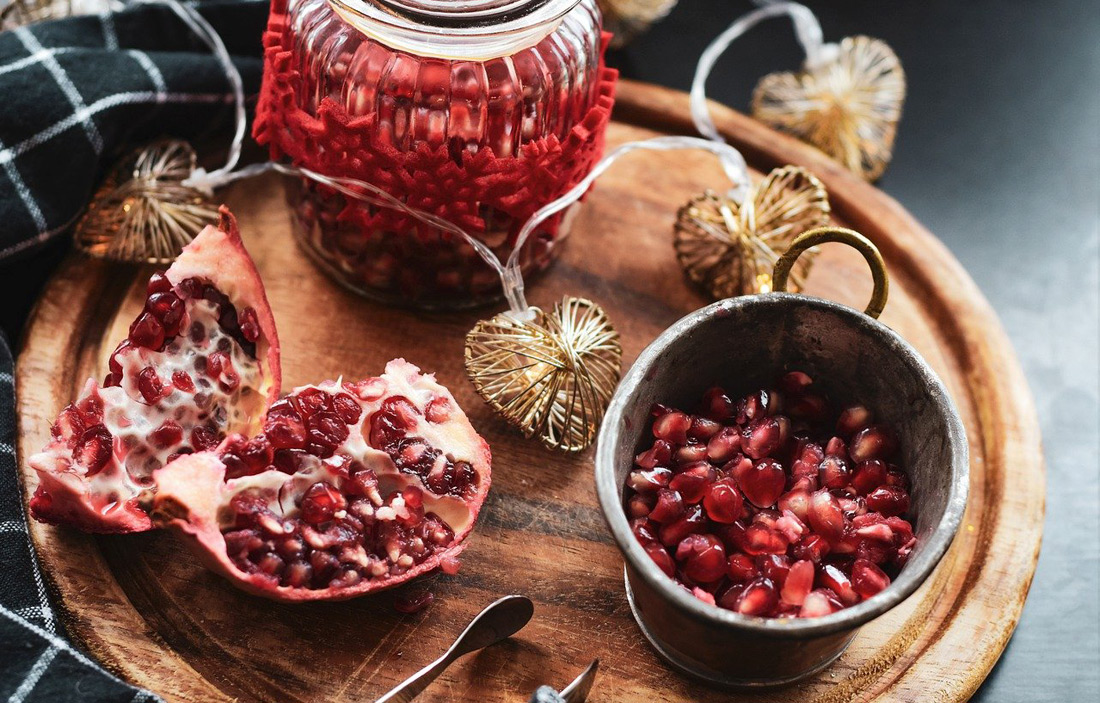
Pomegranates may look exotic, but they have been part of everyday cooking across the Middle East, Persia and the Mediterranean for thousands of years. Their sweet-and-tart flavour works beautifully in salads, rice dishes, meat stews, sauces, desserts and drinks. Pomegranate recipes are particularly popular in Middle Eastern and Mediterranean cuisines, where the fruit is valued for both its flavour and versatility. Here is how to choose, prepare and enjoy this distinctive fruit.
The origin of pomegranates
- The pomegranate (Punica granatum) is believed to have originated in the region stretching from present-day Iran to northern India. It was cultivated thousands of years ago and gradually spread throughout the Middle East, Central Asia and the Mediterranean. Traders and travellers helped introduce it to other parts of the world, including North Africa, Europe and eventually the Americas.
- The name comes from the medieval Latin pomum granatum, meaning ‘seeded apple’. Pomegranates have featured in the art, mythology and religious traditions of many ancient civilisations. In Greek mythology, the fruit was associated with Persephone and the changing seasons, while in Persian culture it became an enduring symbol of abundance and fertility.
- Today, pomegranates are grown commercially in many warm regions, including Iran, India, Turkey, Spain, Israel, Egypt, Morocco, the United States, South America and Australia.
The pomegranate plant and fruit
- The pomegranate tree is actually a large, deciduous shrub, although it can be trained into a small tree. It usually grows to around 5–10 metres tall and can live for many decades. It produces attractive orange-red flowers, followed by round fruits with a tough, leathery skin.
- Pomegranates thrive in warm, relatively dry climates and can tolerate some drought once established. The harvest season varies depending on the growing region. In the Northern Hemisphere, the main season is generally from September to February, while in the Southern Hemisphere it is usually from March to May. This means fresh pomegranates can be found in shops for much of the year.
- Inside the fruit, hundreds of edible seeds are enclosed in juicy, translucent coverings called arils. These are the little jewel-like pieces that we eat. Their colour ranges from pale pink and almost white to deep ruby red, depending on the variety. The surrounding white membranes are bitter and are normally discarded.
- Pomegranate varieties differ in size, skin colour, seed texture and flavour. Some are sweet and mild, while others have a more pronounced tartness. The colour of the outer skin does not necessarily indicate ripeness or sweetness.
Nutritional benefits of pomegranates
- Pomegranates provide dietary fibre, vitamin C, vitamin K and potassium, as well as various plant compounds known as polyphenols. Many of these compounds have antioxidant activity, which is why pomegranates are often included in discussions about antioxidant-rich foods.
- The edible arils provide fibre, particularly when eaten whole rather than juiced. Vitamin C contributes to normal immune function and collagen formation, while vitamin K contributes to normal blood clotting and the maintenance of normal bones. Potassium helps maintain normal blood pressure.
- Pomegranate juice and extracts have been studied for their possible effects on blood pressure, inflammation and cardiovascular health. Some studies have reported promising results, but the evidence is not conclusive enough to regard pomegranates as a treatment or cure for any disease. They are best enjoyed as part of a varied, balanced diet.
- The whole fruit is generally a better everyday choice than juice because it contains fibre and requires more chewing, making it more filling. For more information, see our guide to the nutritional benefits of pomegranates.
Pomegranates in culture and tradition
- Pomegranates have a long history of cultural and symbolic significance. Their many seeds have made them a symbol of fertility, prosperity, abundance and good fortune in several traditions.
- In Greece, pomegranates are associated with good luck and are traditionally broken on the ground at New Year and at some weddings. In parts of the Middle East and South Asia, the fruit also features in celebrations and festive meals. Its rich colour has made it a popular decorative element at Christmas and other special occasions in many countries.
- Pomegranates are sometimes described as an aphrodisiac, and their association with love and fertility goes back to ancient mythology. However, there is no strong scientific evidence that eating the fruit has a direct aphrodisiac effect.
Buying pomegranates
- Fresh pomegranates are usually available in UK supermarkets and greengrocers from autumn through winter, although imported fruit and chilled or frozen arils make them available for longer. In Australia, the main fresh season is generally during the Southern Hemisphere autumn, while in the United States the peak season is usually autumn and early winter.
- When choosing a whole pomegranate, look for one that feels heavy for its size, as this is a good indication that the arils are juicy. The skin should be firm, smooth and relatively unblemished, although a few surface marks are not necessarily a problem.
- The colour can range from yellowish pink to deep red, depending on the variety. A dark red skin does not automatically mean the fruit is ripe or sweeter. A slightly angular shape, rather than a perfectly round one, is also quite normal.
- Ready-prepared pomegranate seeds are widely available in chilled fruit sections, while frozen arils are useful for smoothies, sauces and cooking. Bottled pomegranate juice is another convenient option, but check the label if you want pure juice without added sugar.
How to store pomegranates
- Whole pomegranates keep well. They can be stored in a cool, dry place for a week or two, or in the refrigerator for several weeks. Once the fruit has been opened, remove the arils and keep them in an airtight container in the fridge. They are best eaten within three to five days.
- Pomegranate arils also freeze well. Spread them in a single layer on a tray until frozen, then transfer them to a freezer bag or container. This prevents them from sticking together and makes it easy to use a small handful whenever needed.
How to prepare and deseed a pomegranate
Pomegranates can be messy to prepare because their juice stains clothing, worktops and chopping boards. It is best to work over a bowl and wear an apron if you are concerned about splashes. Avoid cutting deeply into the fruit, as this can damage the juicy arils.
There are several ways to remove the seeds:
- Cut and separate: Slice off the crown at the top of the fruit, taking care not to cut too deeply. Score the skin along the natural ridges, then gently pull the fruit apart into sections. Remove the arils from the white membranes with your fingers.
- Use a bowl of water: Cut the fruit into sections and place them in a bowl of water. Gently loosen the arils with your fingers. The seeds sink, while much of the white membrane floats to the surface, making it easier to separate and discard.
- Tap with a spoon: Cut the pomegranate in half horizontally. Hold one half cut-side down over a large bowl, supporting it with your fingers, and firmly tap the skin with a wooden spoon. The arils should fall into the bowl. This method is quick, although some juice may splash.
- Roll and squeeze: Gently roll the whole fruit on a worktop, pressing with your palm to loosen the arils inside. Cut it in half and squeeze the juice into a bowl. This method is particularly useful when making fresh juice or sauces, rather than when you need whole seeds for decoration.
- Remove as much of the bitter white membrane as possible before using the arils.
How to use pomegranates in cooking
Pomegranates are used extensively in Middle Eastern, Persian, Turkish and Mediterranean cooking. Their sweet-tart flavour provides a refreshing contrast to rich, savoury ingredients, while the arils add a pleasant crunch.
Savoury dishes
- Pomegranate seeds are excellent in salads, grain bowls, couscous, bulgur wheat dishes and rice pilafs. They pair particularly well with fresh herbs such as parsley and mint, as well as walnuts, pistachios, feta, halloumi and roasted vegetables.
- In Persian cuisine, pomegranate is an important ingredient in dishes such as fesenjan, a rich chicken or duck stew made with walnuts and pomegranate molasses. This thick, tangy syrup is made by reducing pomegranate juice and is widely used in Middle Eastern cooking to flavour marinades, salad dressings, sauces and stews. It is also delicious drizzled over roasted aubergines, vegetables or grilled meat.
- The seeds work particularly well with lamb, duck, chicken and game, cutting through the richness of the meat. They can be scattered over a finished dish just before serving or incorporated into salads and sauces.
Sweet dishes and desserts
- Fresh pomegranate arils make a colourful topping for yoghurt, porridge, pancakes, waffles, cheesecakes and fruit salads. They are also delicious with chocolate, citrus fruits, pears and berries.
- In Middle Eastern desserts, pomegranates are often combined with nuts, honey, rose water and orange blossom water. The seeds can also be used in puddings, ice cream, sorbets and other fruit-based desserts.
Drinks and syrups
- Pomegranate juice is enjoyed in many parts of the world, particularly in the Middle East, the Mediterranean and South Asia. Freshly squeezed juice is popular on its own, while concentrated pomegranate syrup is used in drinks, desserts and cooking.
- Grenadine is a familiar ingredient in cocktails and mocktails. Traditionally, it was made from pomegranate juice and sugar, although many commercial versions today use other fruit flavours and colouring. Pomegranate juice also works well in sparkling drinks, lemonade and fruit punches.
- You can make a simple pomegranate syrup by gently reducing fresh juice with sugar until it becomes slightly thick and glossy. For a more concentrated, tangy cooking ingredient, reduce the juice further to make a homemade version of pomegranate molasses.
- A handful of fresh arils can add colour and a refreshing contrast to a simple fruit salad, yoghurt bowl or dessert. Explore our collection of pomegranate recipes for more ideas.
Recipes with Pomegranate >>