
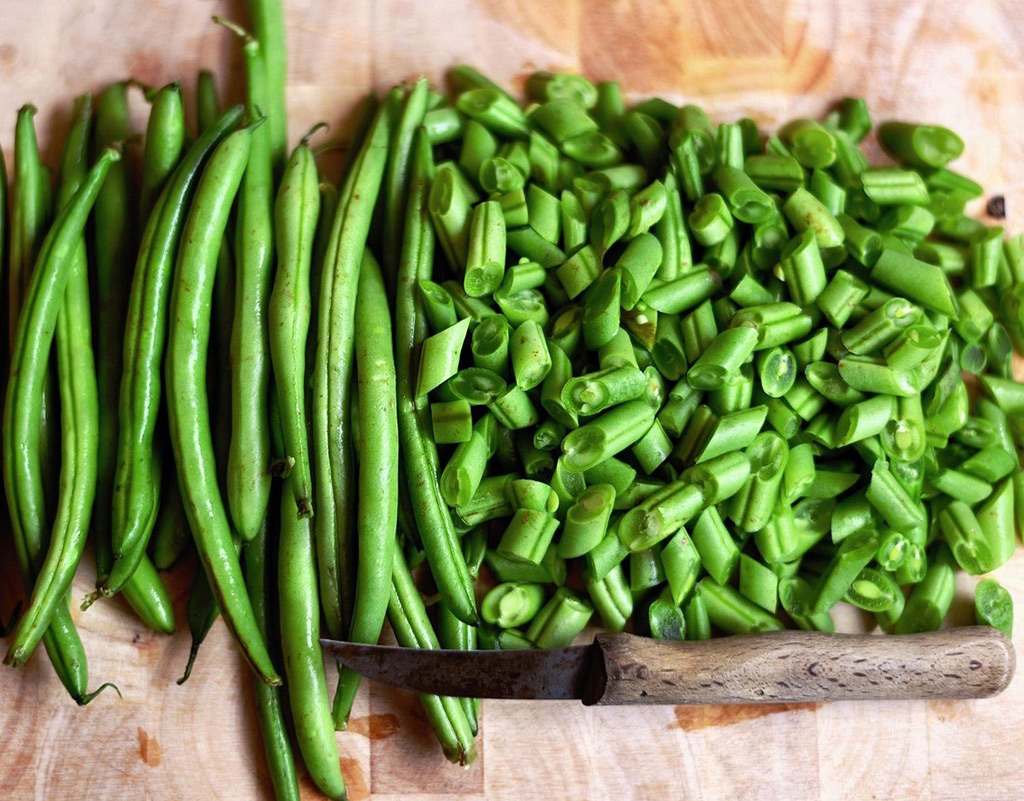
Green beans are among the most versatile summer vegetables, valued for their fresh flavour, crisp texture and easy preparation. They feature in cuisines around the world, from French haricots verts and Mediterranean vegetable dishes to Asian stir-fries and classic American recipes. Green bean recipes can be as simple as steamed beans with butter and herbs, or more substantial dishes combining them with tomatoes, potatoes, eggs, meat or grains.
There are several varieties, but two are particularly common in shops: the familiar green bean and the yellow-podded wax bean. Both are harvested while the pods are still young and tender, before the seeds inside have fully developed.
The plant
- Green beans belong to the legume family (Fabaceae) and their botanical name is Phaseolus vulgaris. They originated in Central and South America and were introduced to Europe after the arrival of Europeans in the Americas.
- The plants are generally divided into bush beans and climbing or pole beans. Bush varieties grow as compact plants, while climbing varieties need support and can produce beans over a longer period. Green beans are warm-season plants and grow best in sunny conditions and fertile, well-drained soil.
- The pods can vary considerably in colour and shape. Green varieties range from very slender pencil beans to broader, flatter types. Yellow wax beans have a milder flavour and a slightly softer texture, while slender green beans tend to be crisp and have a more pronounced fresh, grassy flavour.
- Unlike dried beans, green beans are harvested and eaten while the pods are immature. This is what gives them their characteristic tender texture and makes them suitable for eating as a vegetable.
Buying and storing green beans
- Fresh green beans are at their best during the warmer months, although they are now available in supermarkets throughout much of the year. When buying them, look for firm, brightly coloured pods that snap easily when bent. They should feel crisp rather than limp, with no dark spots, bruising or shrivelled ends.
- Very slender beans, often sold as fine or French beans, cook particularly quickly. They are excellent for steaming, sautéing and salads, while slightly larger beans can stand up well to roasting and longer cooking.
- Keep fresh green beans in the refrigerator and use them within a few days for the best texture. They can also be frozen successfully. Blanch them briefly in boiling water, cool them rapidly in iced water, drain and freeze in suitable portions. Blanching helps preserve their colour, texture and flavour.
- Before cooking, trim the ends. Modern varieties are usually stringless, so there is rarely much preparation beyond trimming and washing.
Nutrition and health
- Green beans are a relatively low-calorie vegetable, providing around 30–35 kcal per 100 g. They are a useful source of fibre and contain a modest amount of plant protein, making them an easy addition to a varied, vegetable-rich diet.
- They provide vitamin C and vitamin K, as well as folate. Vitamin C contributes to normal immune function and helps protect cells from oxidative stress, while vitamin K contributes to normal blood clotting and the maintenance of normal bones. Folate is important for normal cell division and is particularly important during pregnancy.
- Green beans also provide smaller amounts of potassium, magnesium, manganese and iron. Their combination of water and fibre makes them a filling ingredient without adding many calories.
- Green beans should be cooked rather than eaten in large quantities raw. Like some other legumes, raw green beans contain naturally occurring compounds that are reduced by cooking. Steaming, boiling, sautéing or stir-frying is sufficient.
How to use green beans
- Green beans are particularly good at retaining some of their crispness, which is why they work so well in dishes where texture matters. They can simply be steamed and dressed with butter, olive oil, lemon juice or herbs, or quickly sautéed with garlic.
- In French cooking, fine green beans are known as haricots verts and are often served as an elegant side dish. They are particularly good with butter, toasted almonds, shallots or a simple vinaigrette. Green beans are also an essential component of salade niçoise, the classic Provençal salad usually made with tuna, eggs, tomatoes, olives and potatoes.
- In Mediterranean cooking, green beans are often cooked more slowly with tomatoes, onions, garlic and olive oil rather than being kept completely crisp. This style of preparation is found in several countries and makes green beans suitable as a main vegetable dish as well as a side.
- Asian cuisines use green beans very differently. In Thai and Chinese cooking, they are commonly stir-fried with garlic, ginger, chilli, soy sauce or other savoury sauces. They are also excellent with minced meat, tofu or seafood. In Japan, green beans are sometimes served as a simple vegetable side dish, dressed with sesame or a light soy-based seasoning.
- Roasting is another excellent option. Toss green beans with olive oil, garlic and seasoning and roast them at a high temperature until lightly browned but still tender. They can then be finished with lemon zest, toasted nuts, Parmesan or chilli.
- Green beans also work particularly well in salads. They can be combined with tomatoes, potatoes, eggs, olives, feta or grains and served warm or cold. Blanching them briefly before adding them to a salad keeps the colour bright and the texture pleasantly crisp.
- They are also popular in American home cooking, where green bean casserole is a well-known dish, particularly associated with Thanksgiving. The classic version combines green beans with a creamy mushroom sauce and crispy fried onions.
- For preserving, green beans can be pickled or frozen. Pickled green beans, sometimes called dilly beans, are particularly popular in North American home preserving and make an interesting addition to sandwiches, salads and savoury platters.
- Green beans are an uncomplicated ingredient, but their versatility makes them much more than a basic summer side dish. Whether you prefer them crisp and lightly dressed, slowly cooked with tomatoes, or quickly stir-fried with Asian flavours, there are plenty of ways to use them in everyday cooking. Try some of the green bean recipes below for more ideas.
Green bean recipes>>