
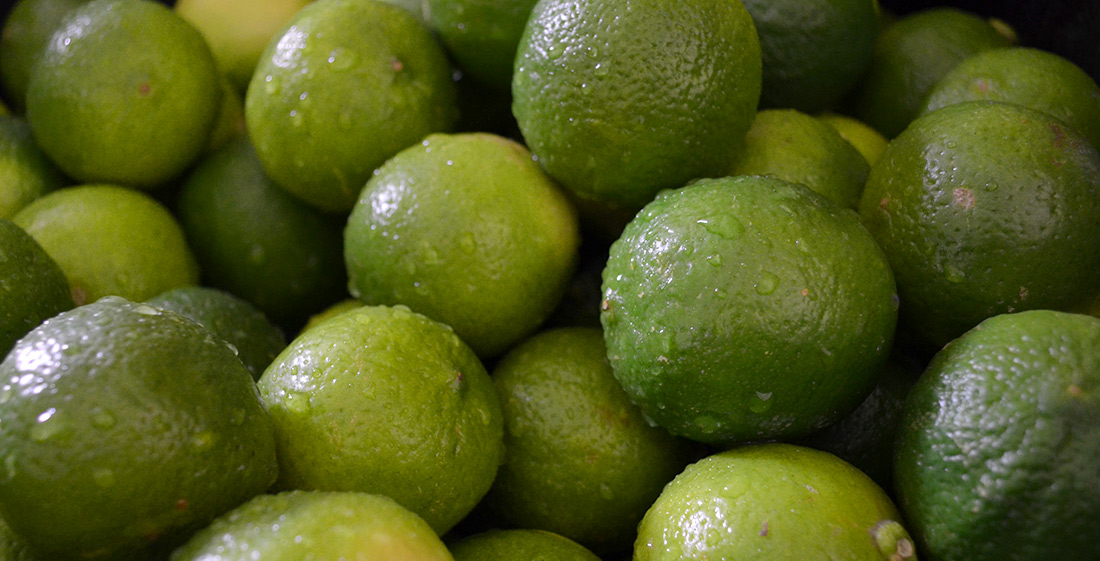
Lime is one of the most useful citrus fruits in the kitchen. Its sharp, aromatic acidity can brighten a dish in seconds, cutting through rich, spicy or salty flavours and bringing balance to everything from tacos and curries to cocktails and desserts. Unlike lemon, lime has a more distinctive floral and slightly bitter aroma, which is particularly important in Mexican, Southeast Asian and Caribbean cooking. There are countless lime recipes in which the fruit is more than a garnish – its juice or zest is an essential part of the finished dish.
The lime plant
- Lime is the common name for several different citrus species, the best known being Citrus aurantiifolia, the Key lime, and Citrus × latifolia, commonly known as the Persian or Tahiti lime. It belongs to the Rutaceae family, along with lemons, oranges, mandarins and grapefruit.
- Limes are thought to have originated in Southeast Asia and gradually spread through the Middle East, North Africa and the Mediterranean before becoming established in tropical and subtropical regions around the world. Today, Mexico is by far the world’s leading producer, with Brazil, India and several other tropical countries also producing significant quantities.
- Lime trees are relatively small and evergreen, with glossy leaves, fragrant white flowers and fruit that can develop throughout much of the year in suitable climates. They are very sensitive to frost, which is why commercial production is concentrated in warm regions.
- Lime trees can also be grown in pots in cooler climates, provided they have plenty of sunlight and are protected from frost during winter.
- The fruit is usually smaller than a lemon, with a thin, aromatic skin and juicy flesh. Most limes are picked while still green. Some varieties turn yellowish as they mature, so green colour alone is not necessarily an indication of freshness.
- Two types are particularly familiar to cooks. Key limes are small, thin-skinned and intensely aromatic, with a distinctive acidity. Persian limes are larger, seedless or nearly seedless and slightly milder, and are the type most commonly found in supermarkets.
Buying and storing limes
- Limes are available in supermarkets throughout the year, as they are grown and imported from different parts of the world. When buying them, look for fruit with smooth, glossy skin and a good weight for its size. A lime that feels slightly springy and heavy usually contains plenty of juice, while very hard, lightweight or wrinkled fruit may have started to dry out.
- The colour is not always a reliable indication of quality. Most limes are sold green, but some may begin to turn yellow as they mature. A yellowish lime is not necessarily spoiled, although it may have a somewhat different flavour and less of the sharp character associated with green limes.
- At room temperature, limes will keep for several days. For longer storage, keep them in the refrigerator, where they can remain in good condition for two to three weeks.
- Lime juice and zest can both be frozen. Juice can be frozen in small portions or ice-cube trays, while finely grated zest can be stored in an airtight container in the freezer. This is particularly useful when a recipe requires only a small amount of lime.
- Always wash limes thoroughly before using the zest. When zesting, remove only the coloured outer layer, as the white pith underneath can be quite bitter.
Nutritional value and health benefits
- Limes are very low in calories, providing around 30 kcal per 100g, although relatively little lime is normally eaten at one time. Their main nutritional contribution is vitamin C, along with smaller amounts of folate and other micronutrients.
- Vitamin C contributes to normal immune function and protects cells from oxidative stress. It is also needed for normal collagen formation, which is important for skin, blood vessels, bones and connective tissue.
- Limes also contain flavonoids and other plant compounds with antioxidant properties. As with other citrus fruits, much of the nutritional interest is concentrated in the peel, although the zest is normally consumed only in small quantities.
- The citric acid in lime juice can also increase the absorption of non-haem iron from plant foods. Adding lime juice to beans, lentils, leafy vegetables or other iron-rich plant foods is therefore a simple way of making a meal more nutritionally useful.
- Lime is sometimes promoted as a detox or “alkalising” food, but these claims are misleading. Although lime juice is acidic, eating it does not make the body more alkaline; the body’s acid-base balance is tightly regulated.
- Because of its acidity, frequent consumption of undiluted lime juice can contribute to dental enamel erosion and may aggravate reflux or other acid-sensitive digestive problems in some people. Drinking it diluted and rinsing the mouth with water afterwards can help reduce contact with the teeth.
- Lime has also been used traditionally in various cultures as a refreshing drink and as a home remedy for minor digestive and respiratory complaints.
Lime in world cuisine
- Few citrus fruits are as deeply associated with particular cuisines as lime is. It is a fundamental ingredient in Mexican cooking, where its acidity is used to balance chilli, herbs, rich meats, avocado and fried foods.
- Fresh lime juice is squeezed over tacos, grilled meats, seafood, soups and snacks, while the zest can be used to add extra aroma. Guacamole is one of the best-known examples: lime provides acidity as well as helping to slow the browning of the avocado.
- Lime is also central to ceviche, particularly throughout the coastal cuisines of Latin America. The acidic marinade changes the texture and appearance of raw fish through a process known as acid denaturation. It does not make raw seafood microbiologically equivalent to cooking, however, so food safety is still important.
- In Thai cuisine, lime is an important part of the characteristic balance between hot, sour, salty and sweet flavours. It is used in dishes such as tom yum, Thai salads and spicy dipping sauces, as well as in curries and seafood dishes. Vietnamese cuisine also makes extensive use of lime, particularly in dipping sauces, noodle dishes, soups and fresh salads.
- Lime is equally important in many Caribbean cuisines, where it is used in marinades, seafood dishes, rice and beans, sauces and refreshing drinks. In the Caribbean and Latin America, lime juice is often combined with chilli, garlic, coriander and other aromatic ingredients.
Lime in drinks
- Lime is one of the world’s most popular cocktail ingredients. It is essential to classics such as the Margarita, Mojito and Daiquiri, where its acidity provides the balance needed for spirits and sweet ingredients.
- It is also a classic partner for tequila, whether served in a Margarita or alongside a shot of tequila with salt. Beyond alcoholic drinks, lime juice makes a simple glass of water, sparkling water or homemade lemonade much more refreshing.
- Fresh lime juice is also widely used in fruit drinks, iced teas and other non-alcoholic beverages, particularly in hot climates.
Lime in desserts
- Lime’s acidity makes it particularly effective in sweet dishes, where it prevents rich desserts from becoming overly heavy. Key lime pie, associated with the Florida Keys, is probably the world’s best-known lime dessert. Its combination of lime juice, sweetened condensed milk and biscuit-style crust has become an American classic.
- Lime also works beautifully in cheesecakes, mousses, tarts, cakes, ice creams and sorbets. The zest is especially useful in baking because it provides intense citrus aroma without adding extra liquid.
Cooking with lime
- Lime juice is particularly good with fish, prawns, chicken and grilled meats. It can be incorporated into marinades, although prolonged exposure to strong acids can alter the texture of delicate foods, so lime-based marinades are best used with some care.
- It is also excellent in salad dressings, salsas, sauces and dips. A squeeze of lime can transform otherwise simple dishes such as rice, roasted vegetables, beans or grilled corn.
- Lime and chilli are a particularly successful combination, while coriander, garlic, ginger, coconut, mint and lemongrass are also natural partners. The zest can be used wherever a dish needs a more concentrated citrus aroma.
Lime is therefore much more than a substitute for lemon. Its distinctive fragrance and bright acidity have made it an essential ingredient in some of the world’s most recognisable cuisines, from Mexican tacos and guacamole to Thai salads and Caribbean drinks. Whether used in a savoury dish, a dessert or a simple refreshing drink, even a small amount of lime can completely change the character of a recipe.
Recipes with Lime >>