
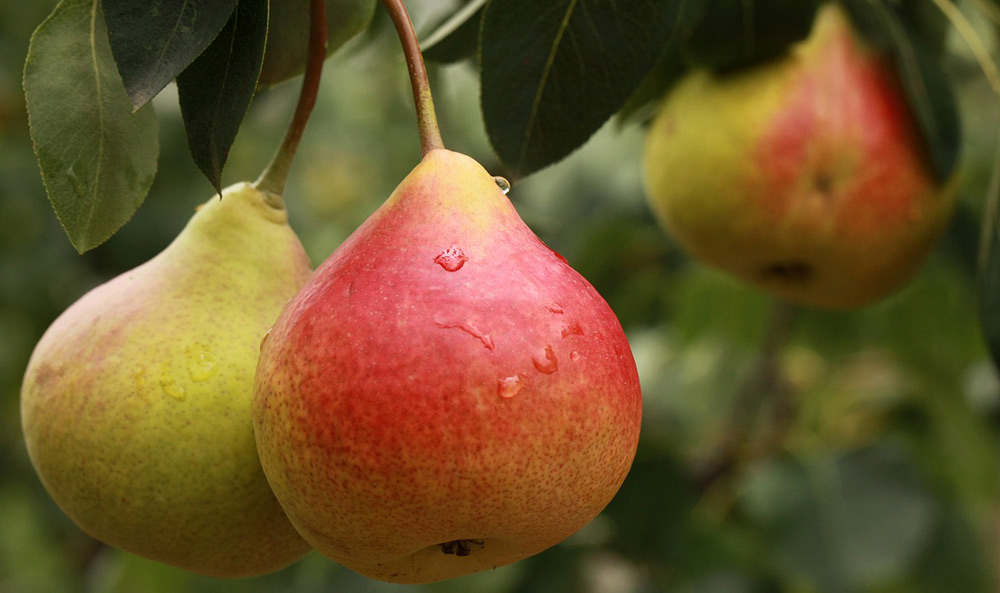
Pears are among the world’s oldest cultivated fruits, enjoyed for thousands of years for their delicate sweetness, juicy flesh and subtle fragrance. They are delicious eaten fresh, but their versatility goes well beyond the fruit bowl. Pears can be baked into cakes and tarts, poached in wine or spices, added to salads and savoury dishes, or preserved as chutneys, jams and compotes. They pair particularly well with cheese, nuts, chocolate, honey and warming spices, making them just as suitable for autumn and winter cooking as for lighter summer meals. Explore our pear recipes for inspiration, from simple everyday dishes to elegant desserts.
The origins of pears
Pears have a long history of cultivation, with their origins thought to lie across parts of Europe and western Asia. Wild pear species are native to Europe, Asia and North Africa, and the fruit was already valued by the ancient Greeks and Romans. Homer referred to pears as a gift of the gods, while the Roman agricultural writer Columella described several cultivated varieties.
During the Middle Ages, pears continued to be grown in monastery gardens and orchards. Their cultivation expanded during the Renaissance, when new varieties became popular in European gardens and royal estates. Over the centuries, selective breeding produced pears with different shapes, textures, flavours and keeping qualities.
Today, pears are grown in temperate regions around the world, including Europe, North and South America, China, Australia and New Zealand. China is by far the largest producer, with both European-style pears and numerous Asian varieties forming an important part of its fruit-growing tradition.
The pear tree
- The common European pear (Pyrus communis) belongs to the rose family (Rosaceae), which also includes apples, quinces, cherries and plums. Although pears are often compared with apples, they have a distinctive texture and aroma. Some varieties have soft, buttery flesh that almost melts in the mouth, while others are crisp, firm and refreshing.
- Pears are unusual in that many varieties are best harvested before they are fully ripe. They continue to ripen after picking, and some develop a better texture and flavour when allowed to mature off the tree. This is why shop-bought pears are often still quite firm.
- Although pears are commonly associated with autumn, there are early summer varieties as well as late-season and winter pears. Their availability and storage life depend on the variety and growing region.
Popular pear varieties
There are thousands of pear varieties worldwide, although only a relatively small number are widely available commercially. The most familiar European varieties include Conference, Williams, Bartlett, Packham’s Triumph, Bosc and Abate Fetel. Asian pears, which are botanically related but quite different in texture, are also increasingly popular.
- Conference: One of the best-known pears in the UK and Europe, Conference pears are long and slender, with green skin that develops brown russeting as the fruit ripens. Their sweet, slightly tangy flavour and good keeping qualities make them suitable for eating fresh, cooking and preserving.
- Williams (Bartlett): Known as Williams in Europe and Bartlett in North America, this aromatic, juicy variety has yellow-green skin that turns golden as it ripens. It is particularly good eaten fresh, used in desserts or preserved. Williams pears are also widely used in the production of pear brandy and eau-de-vie.
- Bosc: Recognisable by its elongated shape and russet-brown skin, Bosc has a firm, dense texture and a sweet, aromatic flavour. It holds its shape well when cooked, making it an excellent choice for poaching, baking and roasting.
- Abate Fetel: An Italian variety with a distinctive long, elegant shape and greenish-yellow skin. Its fragrant, juicy flesh is particularly enjoyable when ripe and is also used in desserts and salads.
- Packham’s Triumph: Originally developed in Australia, this variety has green skin, a rounded base and a sweet, juicy texture. It is widely grown in Australia and New Zealand and is also exported to international markets.
- Comice: Often considered one of the finest dessert pears, Comice has a rounded shape, greenish-yellow skin and exceptionally soft, juicy flesh. It is delicious eaten fresh and pairs particularly well with cheese.
- Anjou: Available in green and red varieties, Anjou pears are popular in North America. They have a mild, sweet flavour and a juicy but relatively firm texture, making them suitable for both fresh eating and cooking.
- Asian pears: Also known as nashi pears, these round fruits are particularly popular in China, Japan and Korea. Unlike European pears, they are usually crisp and crunchy even when fully ripe, with a refreshing, apple-like texture. They are excellent eaten fresh, sliced into salads or used in Asian marinades.
Other well-known varieties include the small, sweet Seckel pear, popular in the United States, and the red-skinned Starkrimson, which adds colour to fruit salads and cheese boards.
Buying and storing pears
When buying pears, consider how soon you intend to use them. If you want to eat them immediately, choose fruit that gives slightly when gently pressed near the stem. A ripe pear should feel tender at the neck, although some varieties remain relatively firm even when ready to eat. Avoid fruit with bruises, damaged skin or soft, wet patches.
If the pears are still hard, leave them at room temperature for a few days to ripen. To speed up the process, place them in a paper bag with a ripe banana or apple. These fruits release ethylene, a natural ripening gas that encourages pears to soften more quickly.
Once ripe, pears should be stored in the refrigerator to slow further ripening. Their keeping time varies considerably by variety: summer pears generally have a shorter shelf life, while some autumn and winter varieties can be stored for several weeks or longer under suitable cool conditions.
Keep an eye on ripe pears, as they can become overripe quite quickly. If you want to slow the ripening of firm fruit, store it separately from apples and bananas. If you have more ripe pears than you can use, they can be peeled and frozen, either sliced or prepared as a purée. A little lemon juice helps prevent discolouration.
Nutritional value and health benefits of pears
- Pears are a naturally sweet, refreshing fruit with a high water content and relatively few calories. They provide around 55–60 kcal per 100g, depending on the variety and ripeness. Most of their energy comes from naturally occurring sugars, while their fibre content makes them a useful addition to a balanced diet.
- One medium pear provides a good amount of dietary fibre, including soluble fibre such as pectin. Fibre supports normal digestion and bowel function, and eating whole pears with their skin provides more fibre than drinking pear juice.
- Pears also contain vitamin C, vitamin K, folate and potassium, along with smaller amounts of other vitamins and minerals. Vitamin C contributes to normal immune function and helps the body produce collagen, while potassium contributes to normal muscle function and the maintenance of normal blood pressure. Pear skin contains a range of plant compounds, including polyphenols, so washing the fruit and eating it unpeeled is a good way to make the most of its nutritional value.
- Pears are naturally free from fat and contain no cholesterol. Their water and fibre content can also help make them satisfying, making a whole pear a useful snack between meals.
- Although pears are often considered a gentle fruit, individual tolerance varies. They contain fructose and sorbitol, which can cause bloating or digestive discomfort in people sensitive to these carbohydrates. People following a low-FODMAP diet may need to limit their intake or choose alternatives.
How to use pears in cooking
Pears are remarkably versatile and can be used in sweet and savoury dishes. Their delicate flavour works particularly well with walnuts, almonds, hazelnuts, honey, cinnamon, ginger, vanilla, chocolate and red wine. In savoury cooking, they pair beautifully with blue cheese, Brie, Camembert, pork, duck, game and earthy ingredients such as mushrooms and root vegetables.
- Fresh pears: Ripe pears are delicious eaten on their own, added to fruit salads or sliced into green salads. They work particularly well with rocket, spinach, walnuts, blue cheese and a simple honey or balsamic dressing. Asian pears, with their crisp texture, are especially good in fresh salads and slaws.
- Baking and desserts: Pears can be used in pies, crumbles, tarts, cakes, muffins, strudels and upside-down cakes. They are delicious combined with almonds, chocolate, ginger or cinnamon. Pear and almond tart is a classic combination, while pears baked with chocolate make a simple but indulgent dessert.
- Poached pears: One of the most elegant ways to prepare pears is to poach them gently in wine, syrup or spiced water. Red wine, white wine, vanilla, cinnamon, star anise and citrus zest all make excellent flavourings. Poached pears can be served with cream, ice cream, custard or chocolate sauce.
- Savoury dishes: Pears are an excellent accompaniment to roast pork, duck and game. They can be roasted alongside root vegetables, added to stuffing or cooked into sauces and chutneys. Their natural sweetness balances rich meats and salty cheeses particularly well.
- Preserves and dried fruit: Pears can be made into jams, chutneys, compotes and fruit butters, or preserved in light syrup for use throughout the year. Dried pears are naturally sweet and chewy, making them a useful snack or an addition to muesli, porridge, cakes and fruit breads.
- Drinks: Pears are used to make juices, cordials, smoothies, cider and alcoholic drinks. In parts of Europe, pear cider is known as perry. Williams pears are also particularly prized for making fruit brandy and eau-de-vie.
Pears in food traditions around the world
Pears have found their way into many regional cuisines, from classic European desserts to savoury Asian dishes.
- In Britain and France, pears are widely used in autumn and winter baking. Pear and almond tarts, crumbles and poached pears are familiar favourites. The French dessert Poire Belle Hélène combines poached pear with vanilla ice cream and warm chocolate sauce. Pears are also often served with cheese, particularly blue cheese, as part of a dessert course or cheeseboard.
- In Italy, pears are famously paired with cheese, particularly Gorgonzola. The expression al contadino non far sapere quanto è buono il formaggio con le pere roughly translates as ‘don’t let the farmer know how good cheese is with pears’. Pears also appear in risottos, tarts and regional preserves.
- In Central and Eastern Europe, pears are used in compotes, cakes, jams and fruit spirits. Pear brandy is particularly popular in several European countries, with Williams pears prized for their aromatic character.
- In the United States and Canada, pears are used in pies, crisps, cobblers, cakes and preserves. They are also a popular addition to autumn salads, often paired with pecans, cranberries, goat’s cheese or blue cheese. Asian pears are widely available in North American supermarkets, particularly in areas with large East Asian communities.
- In Australia and New Zealand, pears are an important commercial fruit crop. Packham’s Triumph and other varieties are enjoyed fresh and used in baking, salads, chutneys and preserves. Their availability during the Southern Hemisphere’s autumn and winter makes them particularly useful for seasonal cooking.
- In China, Japan and Korea, Asian pears are enjoyed fresh and are also used in traditional dishes. In Korean cooking, grated pear is sometimes added to marinades for beef, helping to tenderise the meat while contributing natural sweetness. Japanese and Chinese cuisines also use pears in salads, desserts and seasonal fruit dishes.
Pear recipes
Whether you prefer crisp Asian pears, juicy Williams or Bartlett pears, or the classic Conference variety, there are plenty of ways to enjoy this versatile fruit. Use them fresh in salads, bake them into cakes and tarts, poach them in fragrant spices or combine them with cheese and roasted meats. From simple everyday dishes to elegant desserts and homemade preserves, our pear recipes offer inspiration throughout the year.
Pear recipes>>