
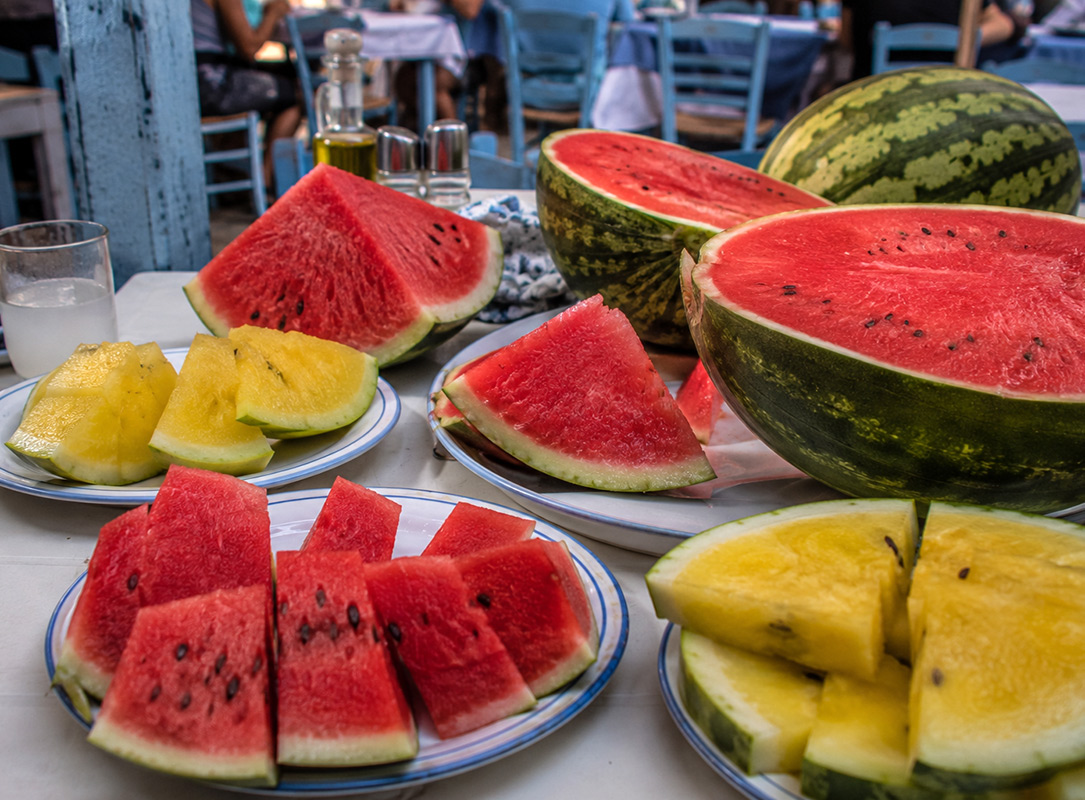
Watermelon recipes have become a summer favourite around the world. While most of us still enjoy watermelon simply sliced and chilled, it’s now just as likely to appear in salads, smoothies, frozen desserts, cocktails and even savoury dishes. Its crisp texture, natural sweetness and exceptionally high water content make it one of the most refreshing ingredients for hot weather.
Watermelon is especially popular across the Mediterranean, the Middle East, the southern United States, and Asia. Greece is famous for watermelon and feta salads, Mexico blends it into refreshing agua fresca, while in the US it’s a barbecue staple, often served grilled or turned into popsicles. Across social media, watermelon has also become a wellness favourite, appearing in everything from watermelon water and homemade electrolyte drinks to frozen lollies, smoothie bowls and post-workout snacks.
The Plant
- Watermelon (Citrullus lanatus) belongs to the cucumber family (Cucurbitaceae), alongside cucumbers, pumpkins, squash and gourds. Although it’s treated as a fruit in the kitchen, botanically it’s classified as a berry known as a pepo.
- The fruit originated in northeastern Africa, where it has been cultivated for thousands of years. From there it spread throughout the Mediterranean before becoming popular across Europe, Asia and eventually the Americas.
- Today, China is by far the world’s largest producer of watermelons, followed by countries including Turkey, India, Brazil, Algeria and the United States.
- Watermelon grows on long trailing vines and thrives in warm climates with plenty of sunshine.
- Despite their names, watermelons and muskmelons (such as cantaloupe and honeydew) are not particularly close relatives. They belong to different genera within the same plant family.
Popular Varieties
- The familiar bright red watermelon remains the most popular, but there are also varieties with yellow, orange and even pale pink flesh.
- Seedless watermelons have become increasingly common over the past few decades, particularly in North America and Europe, although many people still prefer traditional seeded varieties, believing they offer a fuller flavour.
- Mini watermelons have also gained popularity because they’re easier to store and ideal for smaller households.
Buying and Storing Watermelon
- Watermelon is at its best during the summer months, although imported fruit is widely available throughout the year.
- A ripe watermelon should feel heavy for its size, indicating a high water content. The rind should be firm and undamaged, while the creamy yellow patch on the underside—the field spot—suggests the melon ripened naturally on the ground.
- Many people also rely on the traditional tapping test: a ripe watermelon usually produces a deep, hollow sound when tapped.
- Whole watermelons can often be stored for one to two weeks in a cool place. Once cut, they should be covered and refrigerated, then eaten within three to four days.
- Cubed watermelon freezes well and is ideal for smoothies, frozen drinks, sorbets, granitas, and homemade popsicles.
Watermelon Health Benefits
- Watermelon is naturally low in calories, containing around 30 calories per 100 grams, making it one of the lightest summer fruits.
- Because it’s made up of approximately 92% water, it’s an excellent choice for staying hydrated during hot weather. This is one reason watermelon has become so popular on social media as a natural alternative to sugary sports drinks.
- Watermelon provides vitamin C, vitamin A (from beta-carotene), and lycopene, the powerful antioxidant that gives red-fleshed varieties their vibrant colour. Lycopene has been widely studied for its role in protecting cells from oxidative stress.
- It’s also a source of potassium and magnesium, which support normal muscle function and help maintain healthy blood pressure.
- One nutrient attracting increasing attention is citrulline, a naturally occurring amino acid found particularly in watermelon flesh and rind. Some studies suggest citrulline may help support blood flow and reduce muscle soreness after exercise, making watermelon a popular post-workout snack among athletes and fitness enthusiasts. While research is still ongoing, this has contributed to the fruit’s growing reputation as a natural recovery food.
How to use Watermelon in Cooking
- The simplest way to enjoy watermelon is still one of the best—served ice cold in thick slices or bite-sized cubes on a hot summer day.
- It’s also widely used in fruit salads alongside berries, citrus fruits, peaches, grapes, and other melons.
- Watermelon is a popular ingredient in lemonades, juices, smoothies, granitas, frozen cocktails, and mocktails thanks to its naturally high juice content.
- One of the world’s best-known watermelon dishes is the Greek watermelon and feta salad, where sweet watermelon is combined with salty feta, fresh mint, olive oil, and sometimes cucumber or olives. The contrast of flavours has made it a modern summer classic far beyond Greece.
- In recent years, grilled watermelon has become increasingly popular. The heat lightly caramelises the fruit’s natural sugars while giving it a firmer, almost meat-like texture, making it an unusual but delicious addition to barbecues.
- Watermelon is also perfect for sorbets, ice cream, granita, frozen yoghurt, and homemade popsicles because its high water content freezes exceptionally well.
- Many people don’t realise that the white rind is edible too. In the southern United States it’s often made into pickled watermelon rind, while in China and other parts of Asia it’s stir-fried, braised, or added to soups.
- Even the seeds needn’t go to waste. Roasted watermelon seeds are a traditional snack across parts of Africa, the Middle East, India, and China, where they’re valued for their crunchy texture and nutritional value.
- On platforms like Instagram, TikTok, and YouTube, watermelon has become a favourite ingredient for: homemade watermelon water and electrolyte drinks, frozen watermelon lollies and popsicles, protein smoothies and smoothie bowls, post-workout snacks and healthy summer desserts with no added sugar
Few fruits capture the feeling of summer quite like watermelon. It’s refreshing, naturally sweet, incredibly hydrating, and far more versatile than simply serving it in slices. Whether blended into fresh watermelon water, frozen into homemade lollies, tossed into a Mediterranean salad, grilled on the barbecue, or enjoyed after a workout, watermelon continues to inspire both traditional recipes and modern food trends around the world.
Recipes with Watermelon>>