
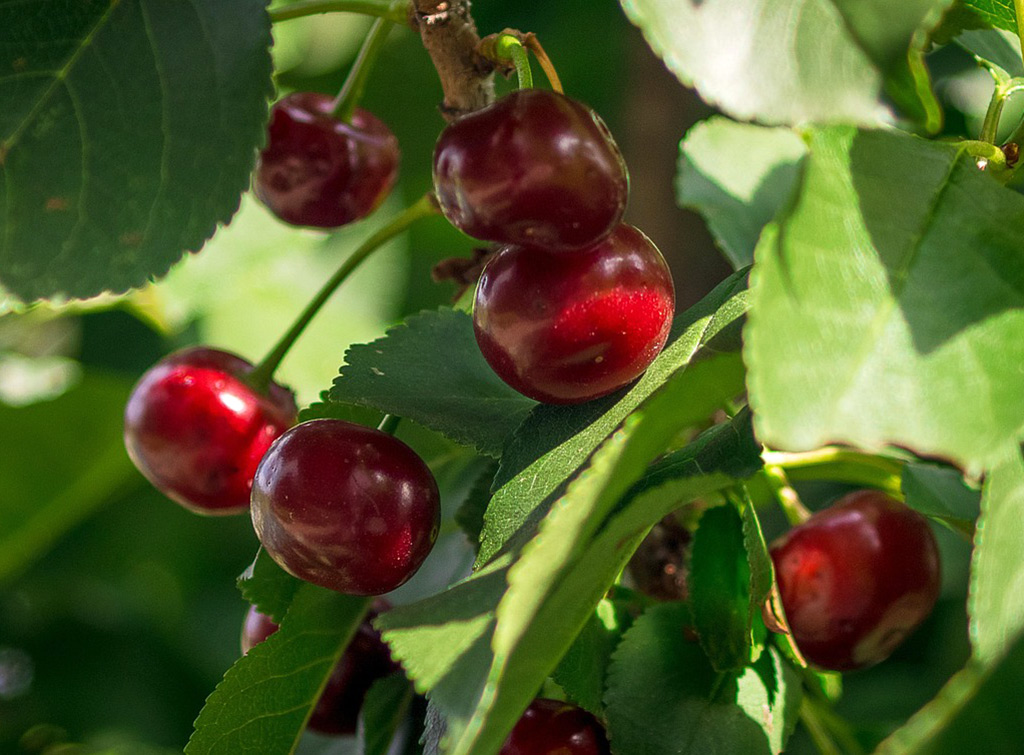
Sour cherry recipes are especially popular across Central and Eastern Europe, where this fruit has been a kitchen staple for generations. Known for its deep red colour and sharp, tangy flavour, sour cherry brings a completely different character compared to sweet cherries. It’s less about snacking and more about cooking – turning up in everything from traditional soups and pastries to modern desserts, sauces and drinks. Its bold, refreshing acidity makes it one of those ingredients that instantly lifts both sweet and savoury dishes.
In countries like Hungary, Poland, Austria, Germany and the Czech Republic, sour cherries are a summer essential. They’re used in classic home baking, seasonal compotes and even savoury meat dishes, while in modern cuisine they often appear in cocktails, cheesecakes, chocolate desserts and gourmet sauces.
The Plant
Sour cherries (Prunus cerasus) belong to the rose family, just like sweet cherries. While they look similar, the flavour is significant different – sour cherries are noticeably more tart, which is exactly why they’re so widely used in cooking rather than eaten fresh in large amounts.
The fruit is native to Europe and western Asia and has been cultivated for centuries. Today, countries like Poland, Hungary, Serbia and Germany are among the largest producers in Europe, and sour cherries remain especially important in traditional Central European cuisine.
The sour cherry tree is hardy and well adapted to temperate climates. In spring it produces white blossoms, and by early to mid-summer it delivers its bright, dark red fruit in abundance. There are several varieties, ranging from more acidic types used for preserves to slightly sweeter ones suitable for fresh eating.
Buying and Storing Sour Cherries
- Sour cherries have a relatively short season, typically from June to July, depending on the region. This is when they’re at their best in terms of flavour and freshness.
- When buying, look for firm, glossy, deep red cherries without bruises or soft spots. Because they’re more robust than berries like raspberries, they handle storage slightly better, but they still don’t last long at room temperature.
- In the fridge, they’ll keep well for a few days, but they’re best used quickly after purchase.
- Sour cherries freeze very well. It’s best to pit them first, then freeze in portions so they’re easy to use later in baking, sauces or drinks. Once frozen, they lose some firmness but keep their flavour beautifully.
- They’re also commonly preserved as compote, jam or syrup, which is a big part of traditional Central European home cooking.
Health Benefits of Sour Cherries
- Sour cherries are relatively low in calories, around 50 kcal/100 grams, making them a light and nutritious fruit option.
- They’re a good source of vitamin C and contain a high level of anthocyanins – the natural plant compounds responsible for their deep red colour. These antioxidants are linked to supporting cell protection and reducing inflammation in the body.
- Sour cherries are also known for containing natural melatonin, a hormone involved in regulating sleep. Because of this, they’re sometimes associated with better sleep quality, although the effect can vary from person to person.
- Their fibre content supports digestion, while potassium contributes to healthy blood pressure regulation.
- In traditional folk use across Europe, sour cherries were often considered a “refreshing” summer fruit, especially valued for helping people cool down during hot weather.
How Sour Cherries Are Used in Cooking
Sour cherries are deeply rooted in Central European cooking and are one of the most versatile ingredients in both sweet and savoury recipes.
- One of the most famous dishes is sour cherry soup – served chilled or warm in Hungary and neighbouring countries. It’s a unique dish that balances sweet, sour and creamy flavours in a surprisingly refreshing way.
- In baking, sour cherries are a classic ingredient in pies, strudels, sponge cakes, traybakes and pastries. Their tartness balances sweet doughs and rich fillings perfectly.
- They also pair exceptionally well with chocolate, creating a deep, slightly bitter-sweet contrast that works especially well in cakes and desserts. Other popular pairings include poppy seed, cinnamon, vanilla and quark, curd & cottage cheese or ricotta.
- Sour cherries are widely used in jams, preserves, syrups and compotes, which are traditional staples in many European households. These preserved versions are especially popular in the winter.
- In drinks, they’re used in lemonades, smoothies, cocktails, liqueurs, fruit wines and even cherry brandies. Their strong colour and flavour make them ideal for both refreshing summer drinks and richer, alcohol-based beverages.
- Although best known for sweet dishes, sour cherries also work well in savoury cooking. They pair beautifully with duck, goose, pork, venison and game meats, where their acidity helps balance richer flavours. They can also be used in sauces and reductions served with roasted meats.
- In modern cuisine, sour cherries are increasingly used in gourmet plating, salad dressings, and creative sweet-and-savoury combinations.
- Fresh sour cherries can also be added to salads with goat cheese, nuts, and balsamic dressing for a more contemporary touch.
Sour cherries are one of those ingredients that carry both tradition and creativity. In Central Europe, they’ve been part of home cooking for centuries, yet they still feel just as relevant in modern kitchens today.
Whether baked into a rustic pie, turned into a chilled summer soup, mixed into chocolate desserts, or reduced into a rich sauce for meat, sour cherries bring a sharp, distinctive flavour that’s hard to replace.
Recipes with Cherries>>