
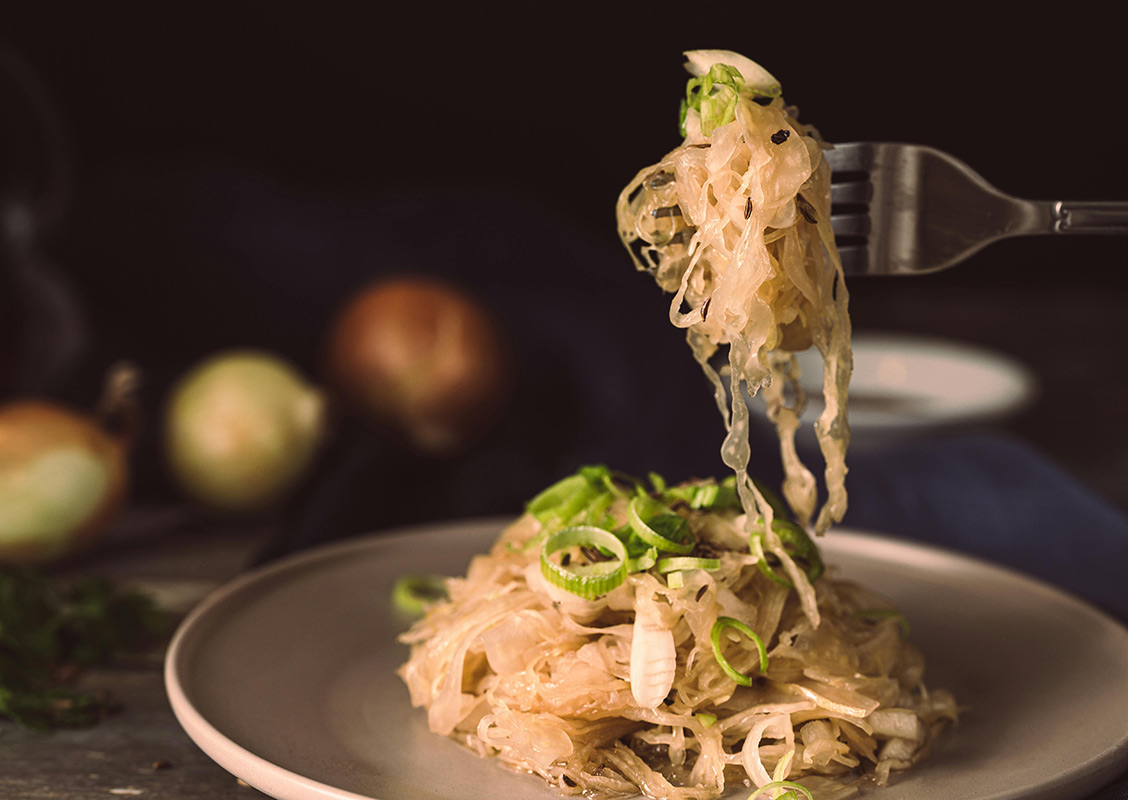
Sauerkraut a simple yet remarkably versatile fermented cabbage, has a long and storied history stretching back more than 2,000 years. Though commonly associated with German cuisine, sauerkraut’s true origins lie in ancient China, where labourers working on the Great Wall preserved finely shredded cabbage in rice wine. Centuries later, the technique made its way into central Europe, where salt replaced rice wine, and the fermentation method we know today evolved. From rustic wooden barrels to modern industrial vats, sauerkraut has remained both a flavourful food and a powerful traditional medicine.
Traditional Barrel Fermentation
Traditional sauerkraut preparation is based on a deceptively simple formula: cabbage + salt + time. Historically, communities prepared large quantities in late autumn to preserve cabbage for the winter. The cabbage was shredded by hand or with a mandoline, layered in wooden barrels, and sprinkled with salt—usually about 2% by weight. The salt draws moisture from the cabbage, forming a natural brine in which lactic acid–producing bacteria thrive.
The mixture is tightly packed—traditionally using fists or a wooden tamper—to exclude air. A clean cloth, wooden lid, and weight are placed on top to keep the cabbage submerged in its brine. Over days and weeks, naturally occurring lactobacilli multiply, lowering the pH, souring the cabbage, and ensuring long-term preservation. The flavour deepens over several months, producing a tangy, crunchy, probiotic-rich food.
Industrial Sauerkraut
In the modern food industry, not all sauerkraut undergoes natural fermentation. Some mass-produced varieties are simply shredded cabbage mixed with vinegar to mimic the sour taste without allowing the slow bacterial fermentation that produces beneficial acids and bacteria. This shortcut reduces production time but sacrifices complexity of flavour and microbial benefits.
Even when fermentation is used commercially, stainless-steel fermentation tanks and pasteurization may be employed. Pasteurization increases shelf life but kills the probiotic cultures that make sauerkraut nutritionally valuable. As a result, consumers must read labels carefully if they want naturally fermented, live-culture products.
How to Buy Sauerkraut
When buying sauerkraut, decide whether you want sauerkraut for its flavour, its probiotic benefits, or both.
The highest-quality sauerkraut is almost always found in the refrigerated section of the store. These brands typically rely on natural fermentation rather than vinegar, and they usually contain only cabbage and salt, occasionally with a few added spices ( such as bay leaves, caraway seeds, chilli etc). Because they have not been pasteurized, they still contain live cultures, which give the sauerkraut its cloudy brine and its health-supporting bacteria.
Jarred sauerkraut is a different product. It is usually pasteurized, and many brands skip fermentation altogether, relying instead on vinegar to provide acidity. Although this type still offers good flavour for cooking, it will not provide the probiotic benefits associated with raw, fermented sauerkraut. For this reason, read the label and look for words such as “raw,” “unpasteurized,” or “naturally fermented” if you want a living, fermented product.
How to Store Sauerkraut
Raw unpasteurized sauerkraut must be refrigerated. It lasts for months because its acidity inhibits spoilage. Always keep the cabbage submerged in its brine and use clean utensils to avoid contamination. Shelf-stable sauerkraut, once opened, also needs refrigeration and should be consumed within a few weeks.
Health Benefits and Medicinal History
Sauerkraut has long been valued not just as a food but as s a potent medicinal remedy. Its reputation as a healing staple dates back centuries. Captain James Cook famously stocked his ships with barrels of sauerkraut to prevent scurvy, relying on its high vitamin C content to protect his crew. In European folk medicine, sauerkraut juice was used for digestive distress, skin issues, and general detoxification.
Modern nutritional science confirms traditional cultures long understood. Naturally fermented sauerkraut is rich in vitamins C and K, B vitamins, minerals such as iron and manganese, dietary fibre, and beneficial organic acids that support healthy digestion.
The probiotics found in raw, unpasteurized sauerkraut play an especially important role in these health benefits. These living cultures help nourish the gut microbiome, which influences digestion, immunity, inflammation, and even mood. Eating naturally fermented sauerkraut regularly can improve bowel regularity, enhance nutrient absorption, and strengthen the body’s natural defence systems. Its combination of fibre and lactic acid makes it particularly effective for improving digestive comfort and maintaining a balanced internal environment.
In the folk medicine of Eastern Europe, sauerkraut—and especially its brine—has been used for generations as a trusted home remedy. The brine was traditionally consumed to relieve indigestion, sluggish digestion and constipation, thanks to its acidity and its abundance of lactobacillus. Many households kept a bottle of sauerkraut brine on hand to treat hangovers, dehydration, and fatigue; its electrolytes, organic acids, and minerals made it a natural rehydration drink long before modern sports beverages existed.
Beyond digestive uses, Eastern European folk healers recommended sauerkraut brine for a wide variety of everyday ailments. It was taken as a gentle remedy for colds and sore throats, sometimes warmed slightly or mixed with honey. The brine was also applied externally: cloths soaked in it were placed on inflamed joints or minor skin irritations to draw out toxins and ease swelling. Even today many people find sauerkraut brine calming, soothing and restorative.
It is important to remember that pasteurization destroys beneficial bacteria, so only raw, unpasteurized sauerkraut and its brine retain these traditional probiotic and enzymatic properties. Whether eaten on its own, added to meals, or sipped as a tonic, naturally fermented sauerkraut remains one of the most accessible and powerful fermented foods. With its abundance of vitamins, enzymes, and living cultures, it continues to support digestion, immunity and overall vitality—just as it has in both modern nutrition and traditional healing practices.
Culinary Uses
Sauerkraut’s versatility is one of its greatest strengths. It can be enjoyed raw, cooked, or lightly warmed. Popular uses include:
- Stews– classic German dishes like Sauerkraut mit speck, Polish Bigos, and Hungarian Székelykáposzta combine sauerkraut with meats and spices.
- Soups – classic dishes include Polish Kapuśniak, Hungarian Korhelyleves, German Sauer Krautsuppe, the Slovak Kapustnica, most of which are rustic, smoky and hearty, as they are made with potatoes, smoked pork ribs or sausages, sauerkraut and various spices.
- Salads – raw kraut can be be mixed with apples, carrots, herbs, gherkins or beets to create fresh and vibrant slaws.
- Sandwiches – pair the tangy kraut it with sausage, salami, frankfurter (in a hot-dog), pulled meat, meatballs and patties to have.
- Stir-fries – adds acidity and crunch.
- Toppings – for baked potatoes, grain bowls, and roasted vegetables.
Note: raw sauerkraut should be added at the end of cooking if you want to preserve probiotics; heat will destroy them.
How to make Homemade Sauerkraut
Homemade sauerkraut is surprisingly easy to make and often superior to store-bought versions. With just cabbage and salt, you can create a living, probiotic food with deep flavour. Homemade Sauerkraut>







No comments yet.