
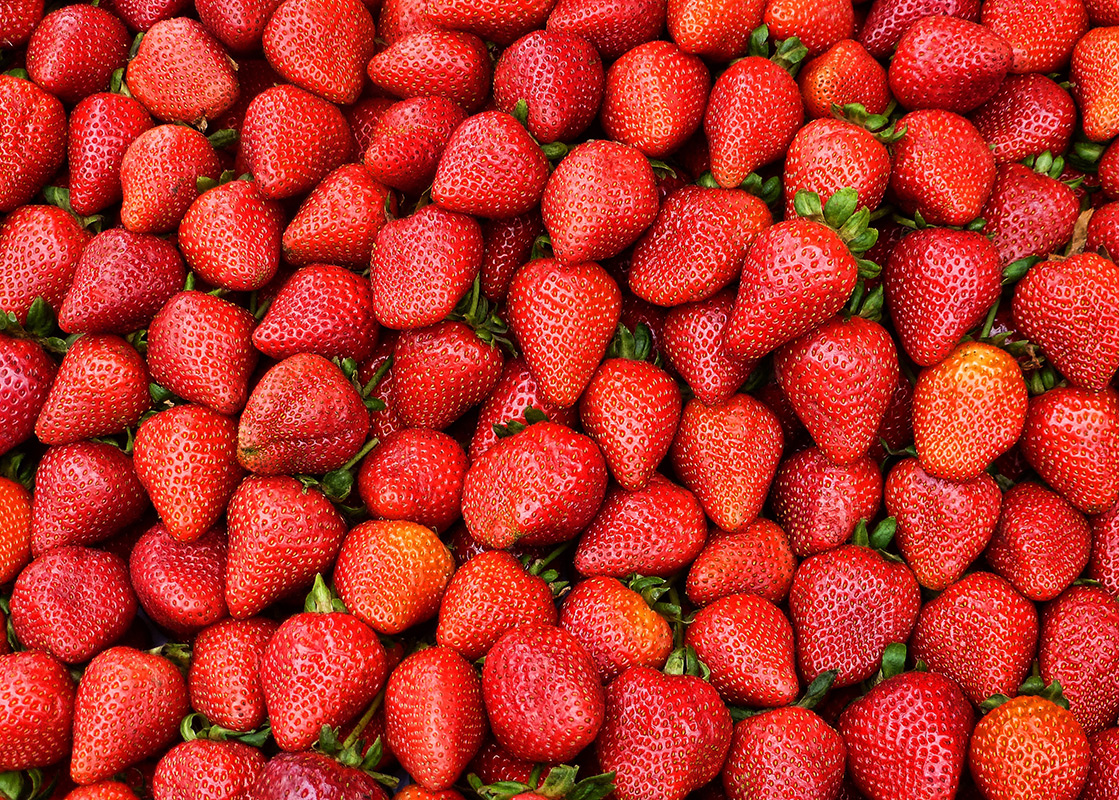
Strawberries are one of the most loved fruits of late spring and early summer. With their fresh aroma, vibrant colour and natural sweetness, they’re hard to resist. Because their season is relatively short, they feel special whether enjoyed on their own or used in everything from simple desserts to more creative recipes.
The Strawberry Plant
The cultivated strawberry’s botanical name is Fragaria × ananassa, and it belongs to the rose family. Interestingly, what we think of as the fruit isn’t technically a true fruit. The red, fleshy part is actually a swollen flower base, while the tiny “seeds” on the surface are the real fruits. In everyday cooking, though, strawberries are simply treated as berries.
Modern strawberries originated from a cross between North and South American species, and today they’re grown all over the world, especially in temperate climates. The plant itself is low-growing and spreads through runners, which makes it easy to grow in gardens, raised beds, or even containers on balconies. It prefers sunny spots and well-drained soil, and in many parts of the UK and North America, it’s a popular choice for home growers.
Strawberry Varieties
There are many different strawberry varieties, typically grouped by when they fruit. Some appear early in the season, others later, and some – known as everbearing varieties – produce fruit steadily over a longer period.
In the UK, the variety Elsanta is widely grown and valued for its balanced flavour, while Honeoye is an early variety commonly found in North America. Albion is a popular everbearing type with sweet, firm fruit, and Mara des Bois is known for its smaller berries and intense, almost wild-strawberry flavour. The exact varieties you come across will usually depend on where you live and whether the fruit is locally grown or imported.
Buying and Storing Strawberries
- In the UK, strawberry season typically runs from May to July, with the best flavour in early summer. In other English-speaking regions, such as the United States, Canada, Australia and New Zealand, the season varies depending on the climate, but it generally falls between spring and early summer. Locally grown strawberries are usually far more flavourful than imported ones, which are often picked early to survive transport.
- When choosing strawberries, it’s worth looking for bright red, glossy fruit without bruising or soft spots. The green tops can also tell you a lot -if they look fresh and vibrant, the berries are likely to be fresher too.
- Strawberries are delicate and don’t keep well for long. It’s best to store them in the fridge and eat them within a day or two. Washing should be done just before eating, as excess moisture speeds up spoilage.
- If you have more than you can use, strawberries freeze well. Once washed and hulled, they can be frozen whole or halved and later used in smoothies, baking or sauces, although they will soften after thawing.
Nutritional Benefits of Strawberries
- Strawberries are low in calories (around 30–35 kcal/100 g) yet rich in nutrients, making them an easy fit for a balanced, health-conscious diet.
- They’re especially known for their high vitamin C content – just one serving can provide a significant portion of your daily needs. This supports the immune system and helps protect cells thanks to its antioxidant properties.
- They also contain other antioxidants, including flavonoids and anthocyanins, which are linked to heart health and may help reduce inflammation.
- Their fibre content supports digestion, while minerals like potassium contribute to maintaining healthy blood pressure.
- Compared to many other fruits, strawberries are relatively low in sugar, which makes them a good option for dieters.
- It’s worth noting that strawberries can trigger allergic reactions in some people, particularly young children, so they should be introduced with a bit of care if there’s any known sensitivity.
How to use strawberries
Strawberries are incredibly versatile and work just as well in simple everyday dishes as they do in more elaborate recipes:
- Most often, they’re eaten fresh, either on their own or combined with other fruits. Their natural sweetness and slight acidity make them a perfect base for desserts, from light mousses and layered trifles to cakes, tarts, and ice cream.
- One of the simplest and most loved combinations is strawberries with cream, which highlights their flavour without overpowering it. They’re also commonly turned into jams, compotes and syrups, where their balance of sweetness and acidity really shines.
- In drinks, they bring freshness and colour to smoothies, milkshakes, lemonades, and even sparkling cocktails.
- Although they’re best known for sweet dishes, strawberries can also work surprisingly well in savoury cooking. They add a fresh, slightly tangy note to salads, especially when paired with ingredients like rocket (arugula), goat’s cheese, or grilled chicken. A drizzle of balsamic vinegar brings out their sweetness, and more unusual pairings – such as with crispy bacon – create an interesting balance between sweet and salty.
- They’re also used in sauces, particularly alongside grilled meats or desserts, and make an attractive garnish thanks to their bright colour and shape. Combined with chocolate, strawberries become a classic treat that feels both indulgent and elegant, which is why chocolate-dipped strawberries are so often associated with special occasions.
Cultural Notes
- In the UK, strawberries are closely tied to summer and are famously associated with The Championships, Wimbledon, where strawberries and cream have become a long-standing tradition.
- In the United States and Canada, they’re a key ingredient in seasonal desserts such as strawberry shortcake and fruit pies, and they feature heavily in home cooking during their peak season.
- In Australia and New Zealand, strawberries are also a summer favourite, often served fresh in pavlovas and other light, fruit-based desserts.
Strawberries are more than just a fruit – they really capture the feeling of summer. Fresh, fragrant, and incredibly versatile, they can elevate anything from a quick snack to an elegant dish with very little effort.
Recipes with Strawberries>>